Illustrated dossier
When did hanging out become a calendar invite?
There is a peculiar amount of organisation involved in doing something unremarkable. Perhaps the answer is to make the occasion smaller.


First there is the suggestion. We should do something. Then there is the question of what, and when, and how far everyone is willing to travel, and whether the thing needs a booking. The conversation starts to carry the administrative weight of an event that nobody remembers deciding to hold.
The occasion keeps getting bigger
A catch-up is a wonderfully undemanding idea. Two or more people, some time, somewhere to be. The trouble begins when “somewhere” becomes a decision about what sort of people we are supposed to be together. Are we a dinner group? A walk group? The people who know the interesting new place? Is it worth the trip, the money, a rare stretch of unallocated time?
None of these questions is ridiculous. It is reasonable to care about time, money and effort. But an invitation can become so well considered that the modest pleasure at its centre disappears behind the arrangements.
The occasion can be small enough to leave room for the people.
How much occasion does a catch-up need?
| Invitation | Time | Place | Cost | Way to leave |
|---|---|---|---|---|
| Open door | Loose | Someone’s home | None | Easy |
| Standing arrangement | Known | Same each time | Low | Easy |
| Catch-up | Agreed | Chosen together | Varies | Usually easy |
| Booked occasion | Fixed | Booked | Set in advance | Harder |
A plan can also be a kindness
It would be easy to romanticise spontaneity. “Just drop in” sounds generous until you are the one with a shift to cover, a child to collect, a long trip home, or a need to know what is expected of you. An open-ended evening can feel effortless to the host and expensive to the guest.
A clear start time, an idea of the food, a way to leave without a speech: these are small forms of consideration. The choice is not between a perfectly scheduled social life and an authentic one. The better question is what makes an invitation easy for the particular people receiving it.
Give the plan fewer jobs
Perhaps the invitation doesn’t have to prove that we are interesting. It doesn’t have to become a memory before it has happened. It can simply make a little space for contact. Come over while I make dinner. Bring whatever you are reading. Walk the same loop we walked last time. Stay for twenty minutes if that is what you have.
There can still be a time and a place. There can still be a calendar invite. The difference is that the plan has stopped auditioning for the role of special occasion. It is an arrangement in the service of company. That seems like enough.
A question to take with you
What is the easiest invitation you actually say yes to: a standing arrangement, an open door, or a clear time and place?
Status and disclosure
Opinion by the publisher’s editorial desk. No interviews or surveys sit behind it, so its claims about social habits are argument, not measurement.
- Status
- published
- Last changed
- 2 November 2026
- Artwork
- Bidgee / Robert Myers · CC BY-SA 3.0.
- Corrections
- How to report an error
Contributor
Standing Invitation desk
The publisher’s editorial desk
Pieces credited to the desk are researched and written by the publisher, My Sister’s Kombucha. When a piece draws on someone else’s work or words, they are credited by name and linked.
Keep reading
All stories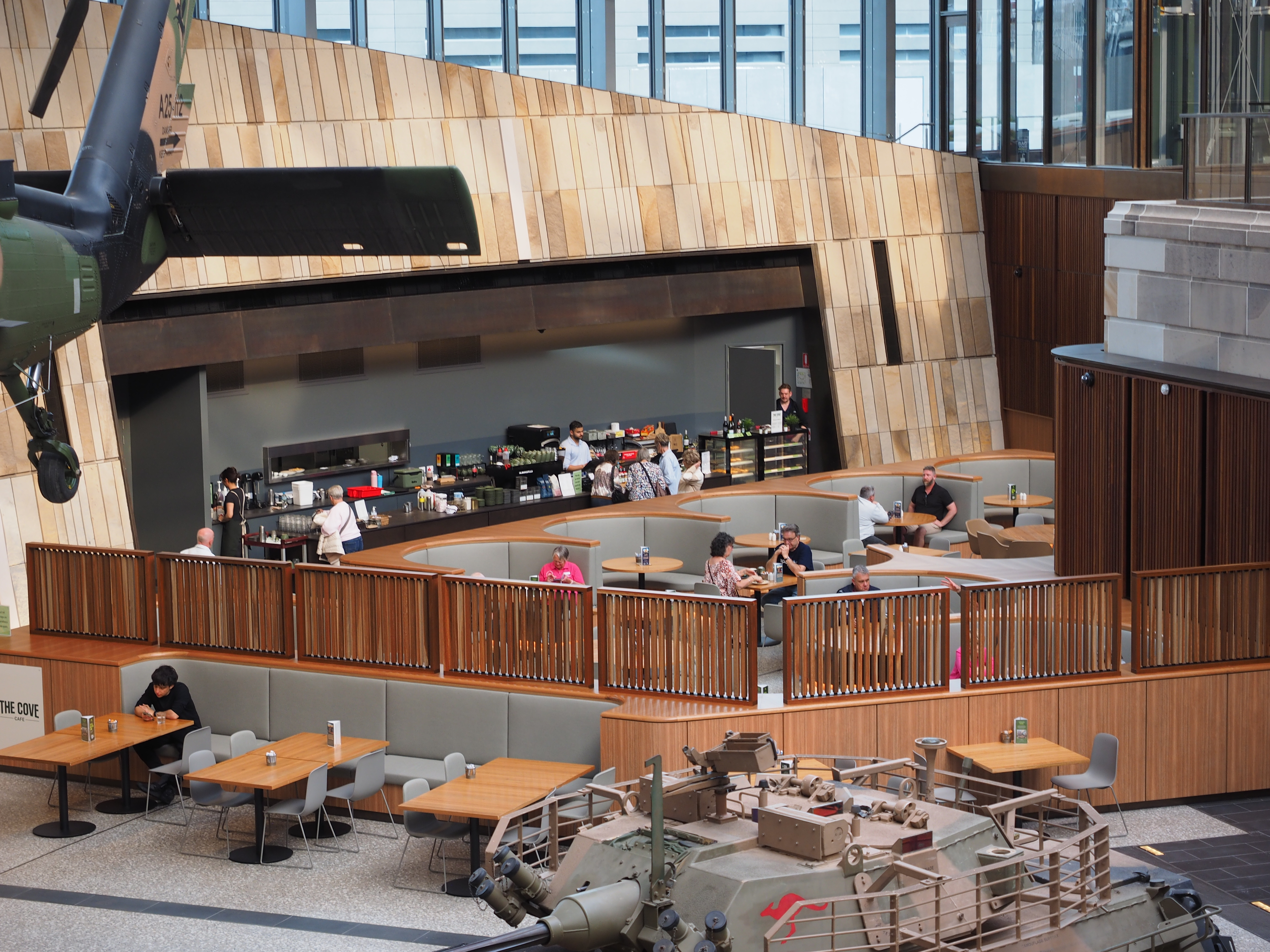
Beside, not opposite — A social atlas of parallel company, shared tasks, games and familiar rooms, with sourced local starting points.
Bring a plate.
Culture & the things we do togetherBring a plate — Three words, several social contracts: what “bring a plate” asks for, and what it leaves unwritten.